
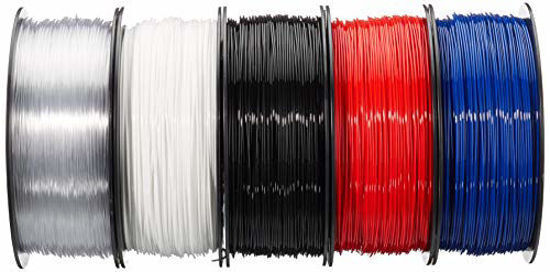
*Once ordered Cura profile with initial configuration for this material will be available for download
Features:
- Durable material
- Tough and strong
- High tensile strength and elasticity
- Wrinkle-proof
- Better abrasion and chemical resistance
- Used to print robust and heavy-duty components
PolyEthylene Terephthalate Glycol-modified, or PETG, is another popular 3D printing material. PETG is a modified version of PET, the plastic you likely associate with disposable water bottles and other clear containers. The main difference between PETG and PET lies in the ‘G’, which signifies the glycol modification that lowers PETG’s melting point and makes it easier to 3D print.
Like its base material, PETG is mainly sourced from crude oil, specifically the chemical components ethylene glycol and terephthalic acid. These chemicals are extracted from the oil and then heated and mixed to create raw PETG plastic. While oil obviously isn’t the most environmentally friendly resource, many recycling centers accept PETG, so this type of plastic isn’t completely harmful to the environment.
PETG is best known for its durability and strength, and the plastic is resistant to high temperatures, UV rays, water, chemical solvents, and more. All of this makes PETG an ideal filament material option for printing parts that will exist in harsh environments or have to undergo a lot of physical stresses.
PETG Filament Specifications:
- Diameter: 1.75mm.
- Dimensional accuracy: ± 0.05mm.
- Nozzle temperature: 210-235° C.
- Bed temperature: 0-70° C is recommended.
- High quality and compatibility.
- Environmentally friendly 3D printer consumables, high performance, no bubbles, no plugs.
- Compatible with 3D printers using 1.75mm diameter consumables with a dimensional accuracy of ± 0.05mm.
Reviews
There are no reviews yet.